%20(1).png)
.png)
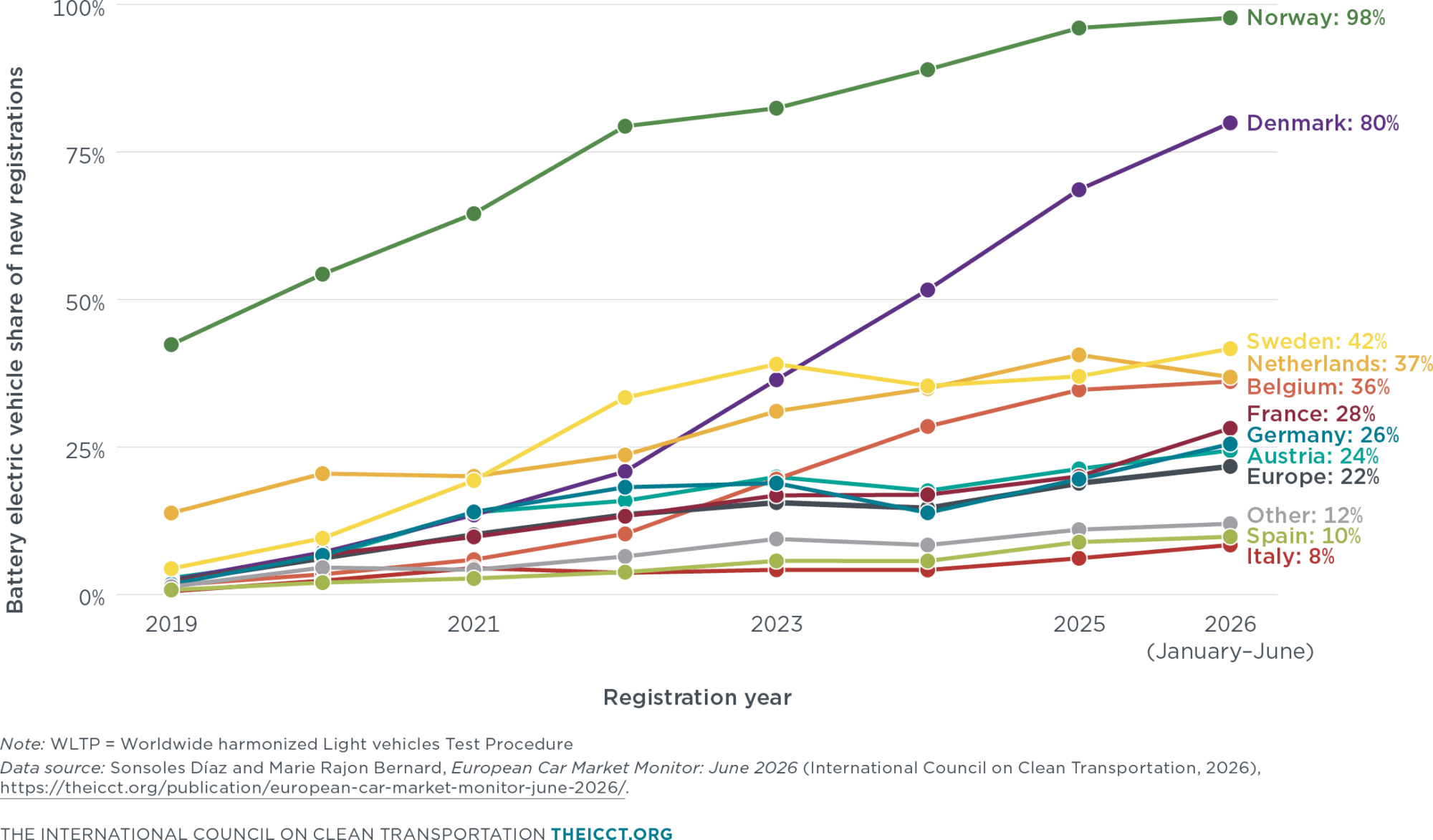
Electric vehicles offer significant environmental and economic benefits, according to the ICCT’s EV Transition Check 2026. Published in September 2026, the report examines Europe’s progress towards zero-emission road transport, including vehicle affordability, charging infrastructure and climate impact.
The assessment cited in the report estimates that battery electric cars in Europe produce around 73% fewer greenhouse gas emissions over their lifetime than comparable petrol cars. This calculation includes vehicle and battery production, energy supply, driving and end-of-life processes. The result depends on the assumptions used, including the electricity mix and vehicle lifetime.
Electric cars also offer savings on the energy needed for driving. According to ICCT, charging a battery electric car using a combination of private and public charging cost approximately 33% less than fuelling a comparable petrol car in the EU in 2025. Actual savings vary with electricity tariffs, charging location and vehicle consumption.
For drivers and businesses considering electric mobility, these findings highlight the value of planning charging around everyday needs. When choosing an EV charging station, available electrical capacity, parking duration and expected use should guide the decision. A suitable charging solution can help make electric vehicles more convenient to use while keeping energy costs manageable.
Source: ICCT — EV Transition Check 2026
+386 69 842 848