%20(1).png)
.png)
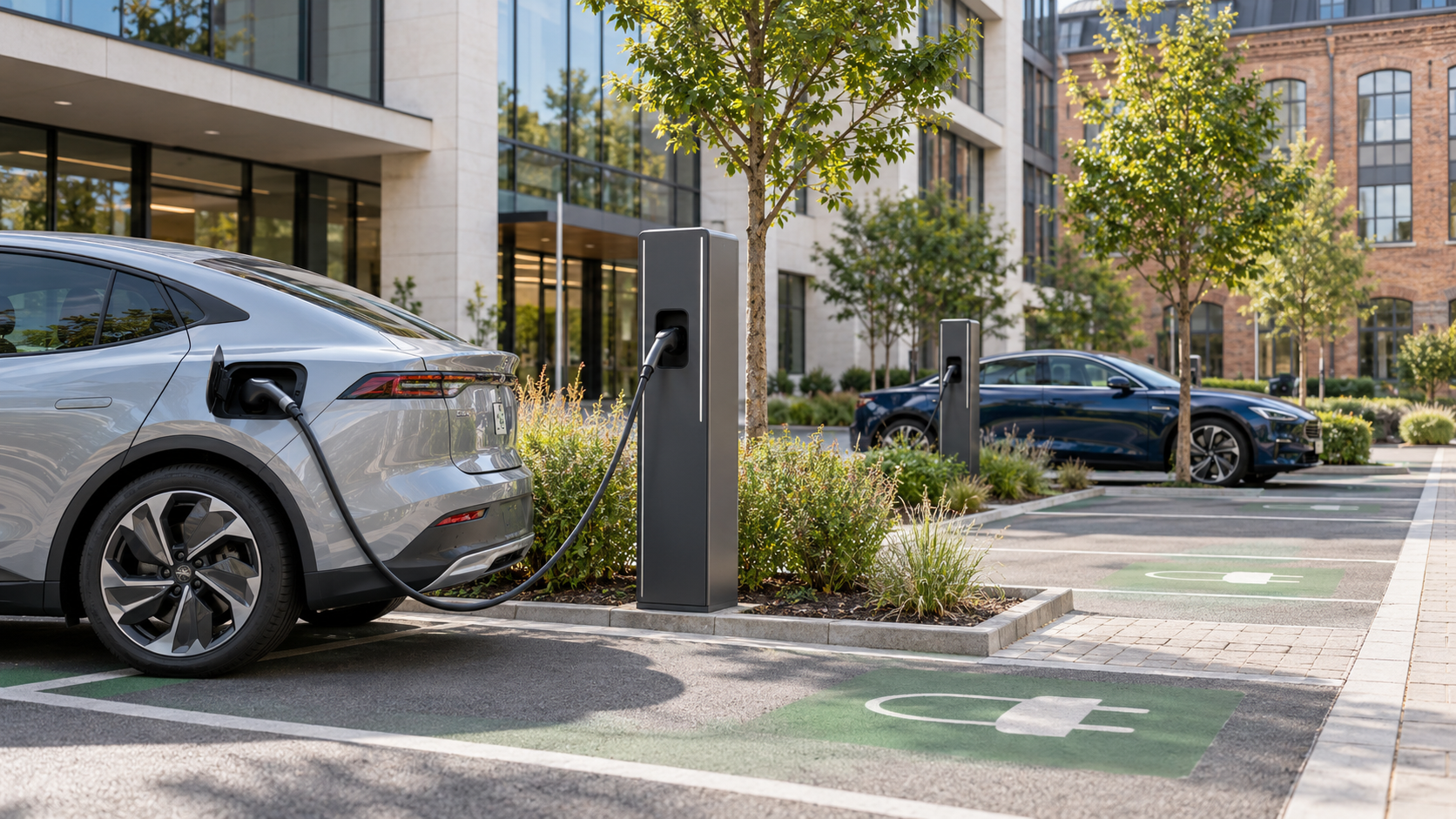
EV charging stations are becoming an important consideration for hotels, shops, office buildings and other commercial properties. Providing charging on-site allows customers and employees to replenish their vehicle’s battery while carrying out their daily activities, making a business car park more useful to electric vehicle drivers.
European legislation adds another reason to plan ahead. Under Article 14 of the revised Energy Performance of Buildings Directive (EPBD), EU Member States must ensure that, by 1 January 2027, non-residential buildings with more than 20 car parking spaces have at least one charging point for every 10 spaces, or cable ducting for at least 50% of spaces to enable future installation. The requirements applicable to an individual property depend on national legislation and any relevant exemptions or transitional provisions.
Beyond regulatory requirements, charging can provide a practical service for different types of visitors. Hotel guests can charge overnight, customers can top up while shopping, and employees can charge during working hours. Businesses should assess how many drivers need this service and how charging would fit into the way their parking spaces are used.
Choosing suitable commercial EV charging stations starts with understanding parking duration, expected demand and available electrical capacity. A site where vehicles remain for several hours has different needs from a location serving visitors who stop briefly. Planning for additional charging points can also make future expansion easier.
For businesses considering installation, an assessment of the car park and electrical infrastructure provides a starting point. It helps determine the appropriate number of charging points, their power and how access will be managed for customers, employees or company vehicles.
+386 69 842 848