%20(1).png)
.png)
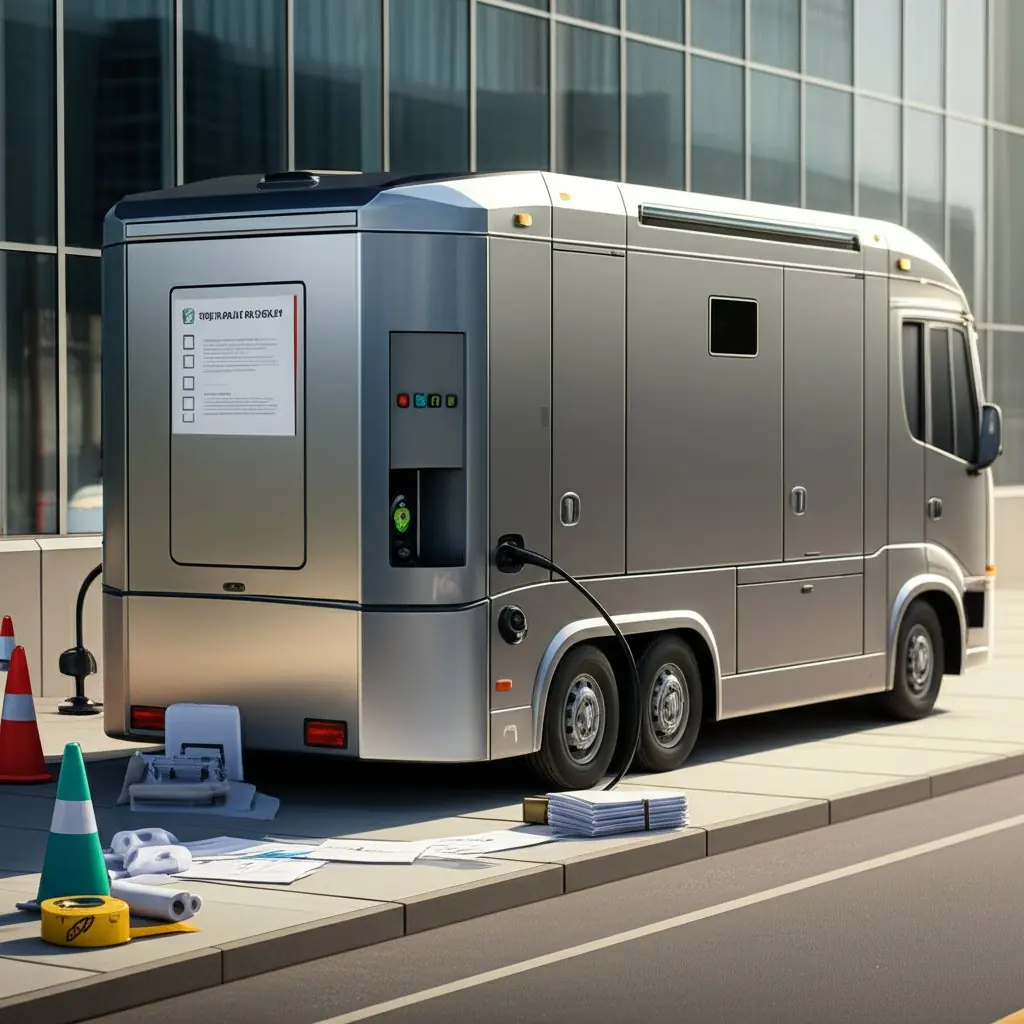
Launching a mobile EV charging business is an exciting opportunity in the growing electric-mobility landscape. But success depends on thoughtful planning, strong operations, and smart revenue models. Here are nine key steps to build a mobile EV charging service that works.
Start by identifying where EVs are concentrated and where charging options are limited. Look at local vehicle registration data, existing charger coverage, fleet operations, event venues and airports. Once you’ve mapped out underserved zones, select a model that fits your strengths:
Operating mobile charging involves more than just equipment. You’ll need:
Whether you use a van with battery buffering or a truck with grid-tie DC charger, pick gear that meets your service level and vehicle types you’ll serve. Key specs: charger output (30-120 kW+), connector compatibility (CCS, CHAdeMO, NACS), modularity, OCPP/network support, certifications. Budget accordingly for vehicle, battery or grid connections, cooling systems.
Build your cost/revenue model: equipment capex, vehicle, driver, insurance, maintenance, energy cost. Estimate jobs per day, kWh per job, pricing per kWh plus call-out fee. For example: base scenario might include 6,600 kWh/month at $0.55/kWh plus call-out fee, with fixed monthly overhead around $8,200. Monitor how many jobs you need per day to break even and when you can turn positive.
To scale beyond ad-hoc jobs, target fleets, rental companies, property managers: customers with many vehicles and recurring needs. Craft pricing models: per-kWh + visit fee, subscription plans, reserved capacity. Offer SLAs with response windows and data/usage transparency to compete.

Efficient dispatching, technician readiness, clear SOPs and safety protocols separate successful services from the rest. From vehicle checks to route planning to job execution: standardize everything. Monitor ETAs, job durations, first-time fix rates. Safety procedures (PPE, lock-out/tag-out, weather protocols) are crucial — especially when dealing with high voltages and mobile setups.
Explore options: equipment leasing, bank loans, revenue-based financing, government grants or rebates. Mobile operations may qualify differently for incentives than fixed infrastructure. Match your financing term to your asset’s useful life and secure early anchor clients before scaling fleet size.
A focused 90-day pilot helps you test assumptions: one vehicle, two core use cases, two anchor customers. Track metrics like jobs/day, kWh delivered/day, gross margin per kWh, on-time rate, repeat business. Use this data to refine pricing, operations, marketing.
When growth is right, expand your fleet, standardize equipment, build stronger vendor partnerships, and deepen B2B relationships. Standardizing on modular, networked chargers means easier maintenance and scaling. Focus on predictable revenue streams and operational discipline as you grow.
A mobile EV charging business isn’t just about equipment — it’s about finding the right niche, operational excellence, and building reliable revenue. By following these nine steps, you’ll be well-positioned to tap into the EV infrastructure wave and build a service your customers trust.

+386 69 842 848